Backgrounders
What media get access to
Download the press kit (PDF, 5.8 MB)
Three days at ADNEC, Abu Dhabi (8–10 December 2026) with the people, places and partners driving the global conversation on water.
Speakers and voices
Hear first-hand from the governments, investors and innovators shaping the global water agenda, with interview opportunities available on request.
The UAE House
Exclusive access for registered media to the UAE House at the Conference, with dedicated opportunities to meet and speak with UAE leaders and experts from across MOEI, MOCCAE, and other federal institutions.
Exhibitions and country pavilions
Explore national pavilions inside The Oasis, including the Netherlands and Senegal (the Conference's co-host), alongside partner spaces and immersive exhibitions such as MBZWI's Water Lab, the Abu Dhabi Pavilion, TAQA, and more.
The Media Zone
Your base inside The Oasis: working desks, editing desks, recording suites (bookable in advance) and press briefings.
Examples of stakeholders on site
Ideas Abu Dhabi, TAQA, FAB, Khalifa University, World Bank, Erth Zayed, MBZWI, Water.org, DoE, Mohamed Bin Zayed Foundation for Humanity, ADNOC, CIFF, Georgetown University, and more.
What to expect
The 2026 UN Water Conference brings governments, the UN, business, investors, innovators and civil society together to accelerate SDG 6, water and sanitation for all. It is only the third UN Water Conference since 1977, and the first of its kind dedicated to SDG 6.
- When
- 8–10 December 2026
- Where
- ADNEC, Abu Dhabi
- Co-hosts
- UAE and Senegal
- First of its kind
- Dedicated to SDG 6
Water for Shared Prosperity
Day 1, Tuesday 8 December
Water is the foundation beneath every major economic and societal opportunity, enabling the systems, growth and transformation that shape our future, underpinned by political leadership and international cooperation.
Investments for Lives and Livelihoods
Day 2, Wednesday 9 December
The water future will only change when ambition is matched by capital, technology and investable solutions that translate into better lives and livelihoods.
Resilient Futures Together
Day 3, Thursday 10 December
Build a more resilient future by strengthening capabilities, enabling regulation, protecting ecosystems and embedding water within international and multilateral processes to turn commitments into lasting action beyond the Conference.
The Blue Zone: the official UN programme
The UN-accredited Blue Zone is the official UN programme: bringing together governments, international organisations, and other accredited stakeholders. It hosts the plenary sessions, six Interactive Dialogues spanning People, Prosperity, Planet, Cooperation, Multilateral Processes and Investments, alongside official side events.
Participation in the Blue Zone requires separate UN accreditation and registration.
The Oasis
A free-to-attend programme designed to bring people, ideas and solutions together. Alongside a 600-person Main Stage, the space will feature exhibitions, national and partner pavilions, youth and innovation experiences, and key moments including launches, announcements and signing ceremonies.
Free to attend. Registration for The Oasis is available through the official website.
The Blue Zone programme of plenaries and interactive dialogues is published by the UN: sdgs.un.org/conferences/water2026/programme
Key dates and press announcements
Key milestones in the run-up to the Conference, what to expect from the press team on site, and what follows afterwards.
| When | What |
|---|---|
| Week of 30 November | Final Conference preview: programme highlights and media opportunities. |
| 7 December | H.E. Abdulla Balalaa, Chief of Event, holds a press briefing in advance of the 2026 UN Water Conference. |
During the Conference (8–10 December): Press conference schedule
| When | What |
|---|---|
| 11 December, 8:00am | Wrap-up press release |
| 11 December, 10:00am | Wrap-up newsletter |
| Date TBC | Joint partner releases |
| Date TBC | Post-conference video |
UAE water story
Water shapes our history, our present, and our shared future.
It is the beginning of life, the foundation of communities, and the thread connecting human dignity with security, opportunity, and prosperity. Every society, every generation, and every future depends on it.
In the UAE, water has shaped how we live, how we build, and how we imagine what is possible. In one of the world's most water-scarce regions, where rain is rare and the landscape is dry and salty, life has always called for ingenuity, resilience, and a belief in possibility.
Our story begins with those who came before us. Across this arid landscape, our ancestors learned to read the land, find water beneath it, and make every drop count. Through the falaj, they carried water across great distances, sustaining farms, families, and entire communities.
But the ingenuity of the falaj was about more than engineering. It reflected a deeper understanding that water connects us, and that our prosperity depends on how we share and protect it. Water was a collective responsibility, and its stewardship was essential to the wellbeing of all.
That spirit of ingenuity, commitment to humanity, and stewardship of our resources continues to guide us. The late Sheikh Zayed bin Sultan Al Nahyan, founder of the UAE, understood that water was inseparable from human dignity and national progress. His vision transformed access to water across the country, helping lay the foundations for the UAE's development. It also extended beyond our borders through a lifelong commitment to improving lives and supporting communities around the world.
His belief that progress should create opportunity for everyone remains at the heart and spirit of the UAE.
Building on that legacy, the UAE has invested in infrastructure, science, and technology to turn seawater into freshwater, advance water reuse, and strengthen resilience. From advanced desalination and water treatment to efficient agriculture, digital intelligence, and emerging technologies, we continue to seek better ways to protect this precious resource and help shape the solutions that will define water security for generations to come.
Water flows through more than our land. It is in the food that nourishes us, the energy that powers our lives, and the ideas and innovations shaping tomorrow. It underpins our economies, connects our communities, and makes so much of what we hope to achieve possible.
Its story has never belonged to one place alone. It connects communities, economies, and generations, shaping our shared security, opportunity, and prosperity. Meeting the world's water challenges requires cooperation, shared knowledge, investment, and innovation that reaches those who need it most.
The UAE champions this global effort, connecting ideas with investment and commitments with lasting impact. We draw confidence from our journey, humility from the scale of the challenge, and optimism from what we can achieve together.
Water is more than part of our past. It is the foundation of our present and a shared responsibility for our future.
Every future flows from water. And what we do for water today will shape the world we inherit tomorrow.
SDG6: what you need to know
How we would like you to contribute and commit at the 2026 UN Water Conference
The first UN Conference dedicated to SDG 6, and only the third since 1977. The co-hosts want success measured by practical outcomes, not only dialogue.
Contribute
- Bring your expertise and voice to the programme across the Blue Zone and The Oasis
- Align to the daily themes and the five nexus pillars: Resilient Cities, Food, AI, Energy, Cooperation
Commit
- Make one specific, measurable SDG6 commitment to announce at the Conference
- Choose its form: investment, partnership, policy, technical solution or knowledge sharing
- Tell us early so we can plan the announcement
Amplify
- Carry the shared message: Every future flows from water
- Use approved messaging and amplify @UNWaterConfUAE
- Submit assets, photos and quotes for approval ahead of time
Outcomes the co-hosts are looking for
- Knowledge sharing
- Partnerships
- Investment
- Political commitments
- Technical solutions
Next step: Tell us how you would like to be involved by completing the accompanying survey, helping us shape the right opportunities for your participation at the Conference.
Our Commitment Framework
Making commitments count. Lead. Mobilise. Scale.
Water is the single element that connects every person across civilisation. It underpins human dignity, stability and prosperity, and progress on every other Sustainable Development Goal depends on it.
In the UAE, we know this from lived experience. Scarcity taught us to innovate, to plan for the long term and to build for tomorrow. That experience shapes how we approach the world's shared water agenda.
In 2023, the world made commitments on water. In Abu Dhabi in December 2026, the task is to make them count.
As Co-Host of the 2026 UN Water Conference with Senegal, we will lead by elevating water to the highest political level: through a Leaders' Political Declaration on Water for Shared Prosperity, a regular cycle of UN Water Conferences from 2031* and one shared framework for delivery. We will mobilise capital, partners and ideas across every sector that water touches. And we will scale what works, tracking every commitment from announcement to delivery so that impact lasts well beyond the Conference.
Every commitment is measured in three ways: the capital that starts it, the people it reaches and the systems that make progress last. Together, they create a shared and credible record of progress on SDG 6.
Abu Dhabi is where the world comes to make commitments count.
*Subject to a General Assembly resolution; negotiations expected to conclude 17 November 2026.
The story
Three measures of change that underpin SDG 6 progress
Every commitment is mapped against the same three measures, so individual pledges add up to one credible story of progress on SDG6.
Capital (Lead)
What are you investing to turn ambition into action?
- Funding committed
- Finance mobilised from others
- Capital deployed on the ground
People (Mobilise)
Whose lives will be safer, healthier or more resilient?
- People directly benefiting
- People equipped and enabled
- Wider population covered
Systems (Scale)
What will change so the impact outlasts the commitment?
- Infrastructure delivered
- Policy, technology and skills
- Measurable water outcomes
Six nexus themes
Water is life. It is the invisible system that underpins every aspect of human dignity, stability, and prosperity. It is the thread that connects everything: our economies, our communities, our ecosystems, and our futures. Once treated as a sector issue, water is a defining priority, enabling resilience, growth, and opportunity.
Water x AI
The future of AI depends on water.
Artificial intelligence is transforming the way societies manage water resources, from leak detection and predictive maintenance to flood forecasting and precision agriculture. At the same time, growing digital infrastructure creates new demands on water and energy systems, reinforcing the need to manage both together.
Water is the invisible thread connecting the systems that shape our future. It underpins our economies, infrastructure, communities, and opportunities. As artificial intelligence becomes increasingly central to economic growth and technological progress, the resources that enable it must be planned and managed with equal ambition.
AI is only as powerful as the resources that enable it. Water is essential to the data centres, infrastructure, and energy systems underpinning the AI revolution, making responsible water use central to a future in which technology can scale sustainably. As data-centre electricity consumption is projected to more than double to around 945 TWh by 2030 (opens in a new tab), there is an opportunity to design water and resource resilience into digital infrastructure from the outset.
Water is also being transformed by AI. From forecasting demand and detecting leaks to improving desalination, irrigation, and flood resilience, AI can translate data into better decisions and practical solutions. The 2026 UN Water Conference can bring innovators, utilities, governments, investors, and communities together to help responsible water technologies move from promising ideas to real-world impact.
The resource foundations of AI
- Data centres consumed approximately 415 TWh of electricity globally in 2024 (opens in a new tab), representing around 1.5% of global electricity consumption. Demand is projected to more than double to approximately 945 TWh by 2030, with AI the principal driver of this growth.
- A typical AI-focused data centre can consume as much electricity as 100,000 households (opens in a new tab), while the largest facilities under construction could consume twenty times that amount. This reinforces the need to plan digital, energy, and water infrastructure together.
- The US Department of Energy’s Lawrence Berkeley National Laboratory estimated that American data centres directly consumed approximately 66 billion litres of water in 2023 (opens in a new tab), with direct consumption potentially reaching approximately 150–275 billion litres by 2028. The figures are US-specific and should not be presented as global estimates.
- According to the UAE’s Crosscurrents report (opens in a new tab), electricity generation accounts for approximately 50% of water consumption across the AI value chain, compared with around 30% from on-site cooling.
- The projected 9.32-trillion-litre water footprint (opens in a new tab) of global data centres in 2030 would be equivalent to the basic annual domestic water needs of more than 1.3 billion people.
- US data centres directly consumed approximately 66 billion litres of water in 2023 (opens in a new tab), with direct consumption potentially reaching 150–275 billion litres by 2028.
AI transforming water management
- A 2025 UNESCO–Deltares assessment (opens in a new tab) identifies applications across surface-water management, groundwater modelling, irrigation, hydropower, water quality, flood-risk management, and climate adaptation.
- UNESCO also cautions that AI models depend on sufficiently large, representative, and high-quality datasets. Explainability, bias, ethical implementation, and the protection of vulnerable communities must therefore remain central to deployment in critical water systems.
- In Dubai, a smart water-leakage simulation facility developed by DEWA produced an algorithm capable of identifying leakage events with 94.4% accuracy (opens in a new tab). DEWA also uses AI and deep learning in applications including Hydronet and automated service diagnostics.
- AI-supported irrigation systems (opens in a new tab) have delivered water savings of approximately 30% in some deployments.
- AI-based leak detection (opens in a new tab) can achieve accuracy rates of 95–99%, although performance depends on representative data and effective integration with utility operations.
UAE application and scale
- DEWA reported that smart water-network management saved 5.62 billion imperial gallons between 2013 and 2023 (opens in a new tab), while network losses fell to 4.6% in 2023.
- In 2025, Abu Dhabi’s Department of Energy introduced AD.WE, an integrated AI-powered energy and water platform. Once fully implemented, it is projected to save 160 million cubic metres of water annually and 1.9 TWh of electricity (opens in a new tab)by 2035. These figures are projections rather than achieved savings.
- The Department of Energy and ADAFSA launched an AI-powered farm smart-meter project (opens in a new tab)in 2025. It currently covers 80 farms in Al Wathba, with planned expansion to 130 farms in Al Nahda and 2,500 in Al Rahba.
Responsible innovation and investment
- The evidence supports a dual agenda: improve the water and energy efficiency of AI infrastructure, while scaling responsible AI applications for water management. The 2026 Conference’s Investments for Water Dialogue provides a route to connect technologies with finance, public policy, implementation capacity, and communities.
- Since 2023, nearly US$300 billion across more than 200 US data-centre projects (opens in a new tab) has faced delay or cancellation, illustrating the commercial consequences of infrastructure, energy, permitting and resource constraints.
- The Crosscurrents report (opens in a new tab) calls for transparent reporting of water and energy use across the AI value chain and integrated planning from the outset.
Water x Resilient Cities
Water shapes the future of cities.
Urban areas are on the front line of climate impacts, population growth and infrastructure pressures. Building resilient cities requires reliable, sustainable and inclusive water systems that can withstand growing environmental and economic challenges.
Water is life, and every city and community depends on it. It is the invisible infrastructure supporting homes, hospitals, businesses, public services, ecosystems, and economies. When water systems are reliable and resilient, cities can grow, adapt, and create opportunity; when they fail, the effects are felt across every part of urban life.
As populations grow and climate pressures intensify, water must be at the heart of how cities plan for the future. Investing in water resilience means modernising networks, reducing leakage, strengthening wastewater systems, anticipating floods and droughts, and integrating water into new infrastructure. These measures help cities absorb shocks, protect livelihoods, and continue functioning during periods of pressure.
Water is therefore a defining urban priority, enabling stability, human dignity, economic growth, and climate resilience. The 2026 UN Water Conference can connect policy, investment, innovation, and implementation, bringing governments, utilities, planners, businesses, investors, and communities together around practical solutions. By treating water as the foundation of the whole city, the Conference can help move urban resilience from isolated projects towards integrated and inclusive systems.
The growing urban water challenge
- Globally, 1.81 billion people live in flood-prone areas (opens in a new tab), including approximately 600 million urban residents exposed to significant annual flood hazards.
- The World Bank estimates that flooding directly affects as much as 10% of jobs in some cities and that annual urban flood losses could reach US$50 billion by 2050 (opens in a new tab).
- According to UNDRR, 90% of disasters are water-related (opens in a new tab), whether caused by too much water, too little water, or deteriorating water quality.
- By 2050, around 1.9 billion urban residents (opens in a new tab) could face seasonal water shortages. Half of the world’s 100 largest cities are situated in areas experiencing high water stress.
Infrastructure, wastewater, and public services
- The UN-Water 2024 assessment found that 42% of household wastewater was not safely (opens in a new tab) treated before discharge in 2022—approximately 113 billion cubic metres.
- The latest WHO/UNICEF estimates indicate that 2.1 billion people lack safely managed drinking water and 3.4 billion lack safely managed sanitation. (opens in a new tab) These service gaps constrain health, resilience, and inclusive urban development.
- Urban water demand is projected to increase by approximately 50–70% over the coming three decades (opens in a new tab), placing additional pressure on infrastructure, public finances and local water sources.
- Strengthening wastewater treatment and reuse reduces pressure on freshwater supplies, limits pollution, and creates a more reliable non-potable supply for landscaping, industry, and selected agricultural uses.
UAE urban water resilience
- DEWA’s Smart Ball technology prevented the loss of 1.34 million cubic metres of water in 2024 (opens in a new tab), generating AED12 million in savings. Dubai’s network-loss rate fell to 4.5% in 2024.
- The UAE Water Security Strategy 2036 targets a 21% reduction in total water demand and 95% reuse of treated water. (opens in a new tab)This is a longstanding strategy, but the targets were reaffirmed by the Ministry in 2025.
- Abu Dhabi’s Department of Energy and Space42 are exploring AI-driven simulations for rainwater catchment and flood resilience (opens in a new tab), alongside satellite-based infrastructure monitoring and soil-moisture analysis.
Building resilience into the whole city
- Abu Dhabi’s Integrated Water Strategy focuses on diversifying sources, improving production and consumption efficiency, strengthening network performance, and using smart technologies to improve long-term resilience.
- The evidence supports integrated urban investment: resilient supply, lower leakage, safely managed wastewater, flood protection, nature-based solutions, digital monitoring, and inclusive planning should be treated as parts of one system.
- The World Bank (opens in a new tab) reports that flooding can directly affect as much as 10% of employment in some cities, demonstrating the link between urban water resilience and economic continuity.
- The UN Office for Disaster Risk Reduction (opens in a new tab) estimates that around 90% of disasters are water-related, whether caused by floods, droughts, storms or deteriorating water quality.
Water x Energy
The energy transition depends on water, and water depends on energy.
Water is essential for energy generation, while energy powers water treatment, desalination, transport and distribution. As countries pursue net zero goals and expand renewable energy systems, integrated planning across water and energy infrastructure will become increasingly important.
Water and energy are inseparable. Water is needed to produce and move energy, while energy is needed to treat, transport, desalinate, reuse, and secure water. The choices made in either system directly affect the resilience, affordability, and sustainability of the other.
The energy transformation is therefore also a water transformation. Renewable energy, efficient desalination, water reuse, and technologies that reduce the water intensity of energy production can turn interdependence into opportunity. Equally, water availability and quality must be considered when energy infrastructure, critical-mineral supply chains, and new industrial capacity are planned.
Investment can accelerate this transition by connecting policy, technology, infrastructure, and finance at the systems level. The 2026 UN Water Conference provides a moment to place water at the centre of energy decision-making and mobilise integrated solutions that are resilient, efficient, and sustainable. Through the Water for Prosperity and Investments for Water Dialogues, governments, utilities, investors, innovators, and communities can help ensure that progress in one system strengthens, rather than constrains, progress in the other.
A two-way dependency
- UNESCO’s 2024 World Water Development Report confirms that electricity enables the pumping, treatment, and distribution of water (opens in a new tab), while water is extensively used in hydropower, thermal and nuclear cooling, fuel production, and mineral processing.
- UNESCO identifies wind and solar photovoltaic power as the least water-intensive electricity sources (opens in a new tab), although energy storage and critical-mineral extraction introduce additional water-quality and water-demand considerations.
- Integrated planning is increasingly important because investments in power generation, cooling, hydrogen, desalination, and critical minerals can either alleviate or intensify pressure on limited water resources.
- The International Energy Agency (opens in a new tab) estimates that energy production accounts for approximately 10% of global freshwater withdrawals.
- The UN World Water Development Report (opens in a new tab) identifies wind and solar photovoltaic generation as the least water-intensive major electricity sources during operation.
- Hydropower provides approximately half of global low-carbon electricity, but generation is increasingly exposed to changes in precipitation, snowmelt, river flow and drought.
The MENA water–energy transition
- The MENA region produced approximately 12 billion cubic metres of desalinated water in (opens in a new tab) 2024, and production is projected to triple by 2035.
- The IEA expects future desalination growth in the region to be met entirely by electricity-powered, high-efficiency reverse osmosis (opens in a new tab), creating an opportunity to combine efficient desalination with cleaner electricity.
- Cooling and desalination are projected to account for close to 40% of MENA electricity-demand growth to 2035 (opens in a new tab).
Integrated Investment
- Around 21,000 desalination plants (opens in a new tab) now operate across approximately 150 countries, creating growing demand for energy-efficient and lower-carbon production.
- Integrated investment opportunities include renewable-powered desalination, wastewater reuse, efficient pumping, smart networks, lower-water energy systems and storage technologies designed around local water availability.
UAE transition and infrastructure
- The Ministry of Energy and Infrastructure stated in 2025 that UAE water policy is expanding membrane-based desalination, increasing renewable-energy integration, improving water-use efficiency, reducing non-revenue water, and maximising treated-water reuse.
- Abu Dhabi’s Taweelah plant produces 200 million imperial gallons of water per day (opens in a new tab), sufficient to serve more than 350,000 homes, using lower-carbon reverse-osmosis technology.
- Abu Dhabi projects that reverse osmosis will supply approximately 80% of its water by 2030 and reduce water-production emissions by 60% (opens in a new tab).
- EWEC’s 2024–2037 planning assessment identifies the transition from thermal desalination to reverse osmosis as critical to decoupling water production from power generation (opens in a new tab).
Building resilience into the whole city
- Abu Dhabi’s Integrated Water Strategy focuses on diversifying sources, improving production and consumption efficiency, strengthening network performance, and using smart technologies to improve long-term resilience.
- The evidence supports integrated urban investment: resilient supply, lower leakage, safely managed wastewater, flood protection, nature-based solutions, digital monitoring, and inclusive planning should be treated as parts of one system.
Water x Food Systems
Water secures food. Food security depends on water security.
Agriculture accounts for around 72% of global freshwater withdrawals, making water management fundamental to feeding a growing global population. At the same time, climate pressures, drought and water scarcity are placing increasing strain on food production systems. The future of food will depend on producing more with less water while building resilience across entire value chains.
Food begins with water. From growing crops and raising livestock to processing and transporting food, water underpins the nourishment, livelihoods, and economies that sustain us. Decisions about water therefore shape the productivity, resilience, and long-term security of food systems.
Agriculture already represents the largest share of global freshwater withdrawals, while food demand and pressure on land and water resources continue to grow. This is an investment opportunity as much as a resource challenge. Efficient irrigation, water-smart agriculture, drought-resilient crops, water reuse, and better information can help produce more food with less water while protecting ecosystems and rural livelihoods.
The UAE’s experience of building food and water security in an arid environment gives this nexus particular relevance. The 2026 UN Water Conference can bring farmers, policymakers, researchers, businesses, investors, innovators, and communities together to scale solutions across the full agrifood value chain. Through the Water for Prosperity and Investments for Water Dialogues, action on agricultural water can strengthen food security, create opportunity, and help future-proof agrifood systems.
Water underpins global food security
- Agriculture accounts for 72% of global freshwater withdrawals (opens in a new tab), making it the world’s largest water-using sector.
- Producing one person’s daily food supply requires approximately 2,000–5,000 litres of water, depending on diet, location and production practices.
- By 2050, agriculture will need to produce approximately 50% more food, feed, and fibre than in 2012 (opens in a new tab), while agricultural freshwater demand is expected to rise by a further 25%.
- Approximately 1.2 billion people live in agricultural areas facing severe water constraints (opens in a new tab), illustrating the connection between water insecurity, livelihoods, and food-system resilience.
Increasing pressure on land and water
- FAO’s 2025 SOLAW report finds that more than 60% of human-induced land degradation occurs on agricultural land (opens in a new tab).
- FAO’s 2025 AQUASTAT update reports that renewable water availability per person fell by 7% over the previous decade (opens in a new tab), with Northern Africa and Western Asia among the most constrained regions.
- These pressures strengthen the case for precision irrigation, drought-resilient production, water reuse, soil restoration, improved water accounting, and policies that allocate water more productively and equitably.
- Global agriculture will need to produce approximately 50% more food, feed and fibre by 2050 (opens in a new tab)than it did in 2012.
UAE food and water innovation
- The UAE National Food Security Strategy 2051 prioritises sustainable, technology-enabled domestic production (opens in a new tab), resilient agricultural practices, international partnerships, and reduced food loss and waste. The government page was updated in December 2024.
- The UAE Government reports that hydroponic cultivation can use up to 70% less water (opens in a new tab) while enabling longer growing seasons and production with little or no soil.
- In 2025, the Department of Energy and ADAFSA launched AI-enabled smart metering to provide farmers with real-time water data, improve distribution, increase efficiency, and reduce water loss.
- ADAFSA reported that its 2024 farmer-extension campaigns promoted precise water quotas, modern irrigation, hydroponics, vertical farming, and smart irrigation informed by meteorological data and soil sensors (opens in a new tab).
Investment and implementation
- The strongest investment case is not a single technology but a connected system: efficient irrigation, suitable crop selection, real-time data, farmer capacity, water reuse, finance, and markets must work together.
- Scaling these solutions can protect water, improve agricultural productivity, strengthen rural livelihoods, and increase food-system resilience without assuming that every technology is appropriate in every climate or farming context.
- Investment in precision irrigation, soil restoration, drought-resilient crops, reuse and improved water accounting can help produce more food with less water, but technology must be integrated with farmer finance, training and market access.
- The World Bank estimates that irrigated agriculture occupies around 20% of cultivated land but produces approximately 40% of global food.
Water x Cooperation
Water can be a catalyst for cooperation.
Rivers, lakes and aquifers cross borders, connecting countries, economies and communities. Strengthening cooperation around shared water resources is increasingly important to managing climate risks, improving water security and supporting sustainable development.
Water knows no boundaries. Rivers, lakes, and aquifers connect communities, ecosystems, economies, and nations, making water a shared responsibility that crosses borders, sectors, and generations. How societies govern and share water reflects their values and their commitment to collective stability and prosperity.
Managing shared water peacefully and sustainably requires cooperation, stronger governance, shared knowledge, scientific collaboration, and inclusive decision-making. Water can create opportunities for dialogue, build trust, and turn shared challenges into shared solutions. Cooperation also strengthens the ability of countries and communities to prepare for droughts, floods, pollution, and the growing effects of climate change.
The UAE’s water story is rooted in this principle. The falaj combined engineering with an agreement about how a scarce resource should be shared fairly. The 2026 UN Water Conference can carry that principle forward globally. Through the Water for Cooperation Dialogue, the Conference can strengthen international cooperation, connect policy with implementation, and help countries, institutions, communities, scientists, young people, and Indigenous Peoples co-create solutions that improve lives and build resilience.
Water crosses borders
- An estimated 313 rivers and lakes and 468 aquifers (opens in a new tab)are shared by two or more countries, while 153 UN Member States rely on water that flows to or from another country.
- Transboundary rivers account for approximately 60% of global freshwater flows (opens in a new tab), and transboundary river and lake basins are home to more than three billion people.
- Actions affecting water quantity, quality, ecosystems, and infrastructure in one country can create consequences throughout a shared basin, making coordinated governance indispensable.
The cooperation gap
- Only 43 of the 153 countries sharing transboundary waters (opens in a new tab) have operational arrangements covering at least 90% of their shared basins.
- Only 26 countries have all their shared waters covered by operational arrangements, and more than 20 countries have no operational arrangements at all.
- Across the 117 countries for which the SDG indicator can be calculated, an average of only 59% of transboundary basin area (opens in a new tab) is covered by operational cooperation arrangements. The figure has changed little since 2017.
Cooperation strengthens resilience
- Operational agreements provide a foundation for exchanging data, developing shared climate scenarios and adaptation strategies, establishing early-warning systems, and mobilising finance.
- UN reporting in 2025 found that only 50% of transboundary river and lake basins have joint flood-warning systems (opens in a new tab); only 20% have joint disaster-risk strategies and 14% have joint climate-adaptation strategies.
- Cooperation can support water access, irrigation, energy security, ecosystem protection, drought resilience, and conflict prevention, providing practical benefits beyond the management of water itself.
- The World Bank’s Global Facility for Transboundary Waters (opens in a new tab) supports cooperation by combining shared analysis, institutional capacity, investment planning and financing across rivers, lakes and aquifers.
The UAE and the 2026 Conference
- The UAE and Senegal are co-hosting the 2026 UN Water Conference to accelerate SDG 6, strengthen global water governance, and elevate water within international decision-making.
- The Conference’s six Interactive Dialogues are intended to generate practical recommendations, strengthen partnerships, and advance initiatives capable of accelerating implementation. Water for Cooperation is one of the six official dialogue themes.
- The UAE Ministry of Foreign Affairs has positioned global water cooperation, practical partnerships, and integrated environmental action as priorities in the approach to the Conference.
Water x Investment
Investment in water is investment in growth, resilience and stability.
Achieving SDG 6 will require significantly greater investment across infrastructure, technology, nature-based solutions and capacity building. Water presents one of the greatest opportunities for public-private collaboration, yet financing remains insufficient relative to global needs.
Water is the foundation of prosperity, resilience, and sustainable development. It underpins jobs, productivity, business continuity, food and energy security, economic growth, and climate resilience. Yet water is still too often treated as a sector issue at the margins of economic and investment decisions. If water is fundamental to our future, it must be reflected in the way capital is mobilised and deployed.
The challenge is implementation. Stronger pipelines of investable projects, capable institutions, effective financing structures, regulatory reform, and greater transparency are needed to build confidence, reduce risk, and attract finance at scale. Governments cannot meet the scale of need alone. Development finance institutions, multilateral development banks, commercial banks, institutional investors, philanthropies, businesses, and innovators all have a role to play.
The Investments for Water Dialogue places finance, technology, innovation, and capacity-building at the heart of the 2026 UN Water Conference. It creates an opportunity to connect country-led priorities with capital and partnerships—turning ambition into projects, and projects into measurable impact.
Closing the Water Financing Gap
- The World Bank’s 2024 assessment (opens in a new tab)identifies an annual spending shortfall of US$131.4–140.8 billion to achieve universal access to safe water and sanitation.
- Developing countries spend approximately US$164.6 billion annually on water, equivalent to around 0.5% of their combined GDP. Approximately 91% comes from the public sector, while less than 2% comes from private finance.
- The same assessment found that only around 72% of allocated water-sector budgets are executed annually, demonstrating that mobilising more finance must be accompanied by stronger institutions, capacity, and investment management.
Water as an Economic Opportunity
- Only Water supports an estimated 1.7 billion jobs worldwide (opens in a new tab), spanning agriculture, industry, energy, and services. Reliable water systems help protect jobs, raise productivity, and enable economic growth.
- In low-income countries, approximately 55% of employment depends on water-intensive sectors (opens in a new tab), compared with less than 20% in high-income countries.
- Municipal and industrial water reuse (opens in a new tab) could unlock up to US$340 billion in investment by 2040.
- With targeted investment and enabling regulations, municipal and industrial water reuse could unlock up to US$340 billion in investment by 2040 (opens in a new tab), including significant opportunities for private capital.
Mobilising Finance and Building Investable Projects
- In 2024, ten multilateral development banks approved US$19.6 billion in water-related financing, (opens in a new tab) including US$14.4 billion for low- and middle-income countries.
- Risk-pooling, public guarantees, and catalytic capital can help mobilise long-term private and international finance.
- Stronger institutions, clear pricing and regulation, transparent data, and bankable delivery models can reduce risk and attract investment at scale.
- The 2026 UN Water Conference includes a dedicated Investments for Water Interactive Dialogue (opens in a new tab), co-chaired by France and South Africa.
- Only around 72% of allocated water-sector budgets (opens in a new tab) are executed annually, showing that institutional and delivery capacity must improve alongside the mobilisation of additional finance.
- Blended finance, public guarantees, blue bonds and catalytic capital can reduce risk and improve project viability, particularly where the social value of water exceeds the immediate financial return.
UAE Leadership in Action
- FAB has set an AED100 billion (US$27.2 billion) blue-finance target for 2026–2035 and will become the first MENA bank to sign the UN Sustainable Blue Economy Finance Principles.
- This forms part of FAB’s AED500 billion sustainable-finance commitment. FAB has issued US$70 million in blue bonds (opens in a new tab)supporting water and marine projects.
- The Abu Dhabi Global Water Platform (opens in a new tab) aims to mobilise US$2 billion by 2030, including US$1 billion from ADFD, and benefit approximately 10 million people.
- The Mohamed bin Zayed Water Initiative supports the five-year US$119 million XPRIZE Water Scarcity (opens in a new tab), advancing affordable, scalable, and sustainable desalination.
The six Interactive Dialogues of the official UN programme are described on the About page.
Follow and tag us
Visit the 2026 UN Water Conference website and follow our official social media channels for the latest news, programme information, and updates.
Find us across all social channels at @unwaterconfuae. We're using #2026UNWC to bring together conversations around the Conference, and welcome tags and collaboration requests when sharing coverage, interviews, or highlights.
Tagging and collaborating with us
Tagging us helps connect your coverage to the Conference. Tagging allows us to:
- Find media and partner content quickly
- Repost and reshare posts
- Extend the visibility of Conference coverage
- Direct audiences to the official Conference account for more information
- Build a more active and community-led social presence
- Showcase the breadth of organisations involved
Collaborations on Instagram
For those interested in collaborating, we welcome Instagram collaboration invitations for Conference-related content. In the Instagram app, create the post as usual, then before publishing select Tag people, tap Invite collaborator, search for @unwaterconfuae, and send the invitation and we will review your request.
#2026UNWC
Bringing content together around one shared hashtag helps create a digital archive of announcements, media coverage, partner activity, attendee experiences, and live Conference conversations.
About the 2026 UN Water Conference
Water is life. It sustains human dignity, underpins prosperity, and connects our communities, economies, and shared future.
Co-Hosted by the United Arab Emirates and Senegal, the 2026 UN Water Conference will take place in Abu Dhabi from 8–10 December. The third UN Water Conference since 1977, it will be the first dedicated to accelerating implementation of Sustainable Development Goal 6: ensuring water and sanitation for all.
Across three days, the Conference will explore Water for Shared Prosperity, Investments for Lives and Livelihoods, and Resilient Futures Together — bringing the world together to lead, mobilise, and scale, turning commitments into investments, partnerships, and practical solutions.
Alongside the official UN programme in the Blue Zone, the UAE-hosted Oasis will be the meeting point for the wider global water community: a platform to connect sectors, exchange ideas, forge partnerships, and accelerate action. Through a programme of high-level discussions, country and partner pavilions, exhibitions, and innovation showcases, The Oasis will demonstrate how water underpins the systems that sustain our lives and economies — from food and energy to health, industry, technology, and nature. It will bring together governments, businesses, investors, innovators, civil society, and young leaders to shape solutions, announce major commitments, mobilise investment, and build the partnerships needed to lead, implement, and scale action.
Every future flows from water. Abu Dhabi is where that future is built.
Registration for The Oasis is free and open to all. Join the conversation on socials at @UNWaterConfUAE and help shape what comes next: www.unwaterconferenceuae.com
Chief of Event
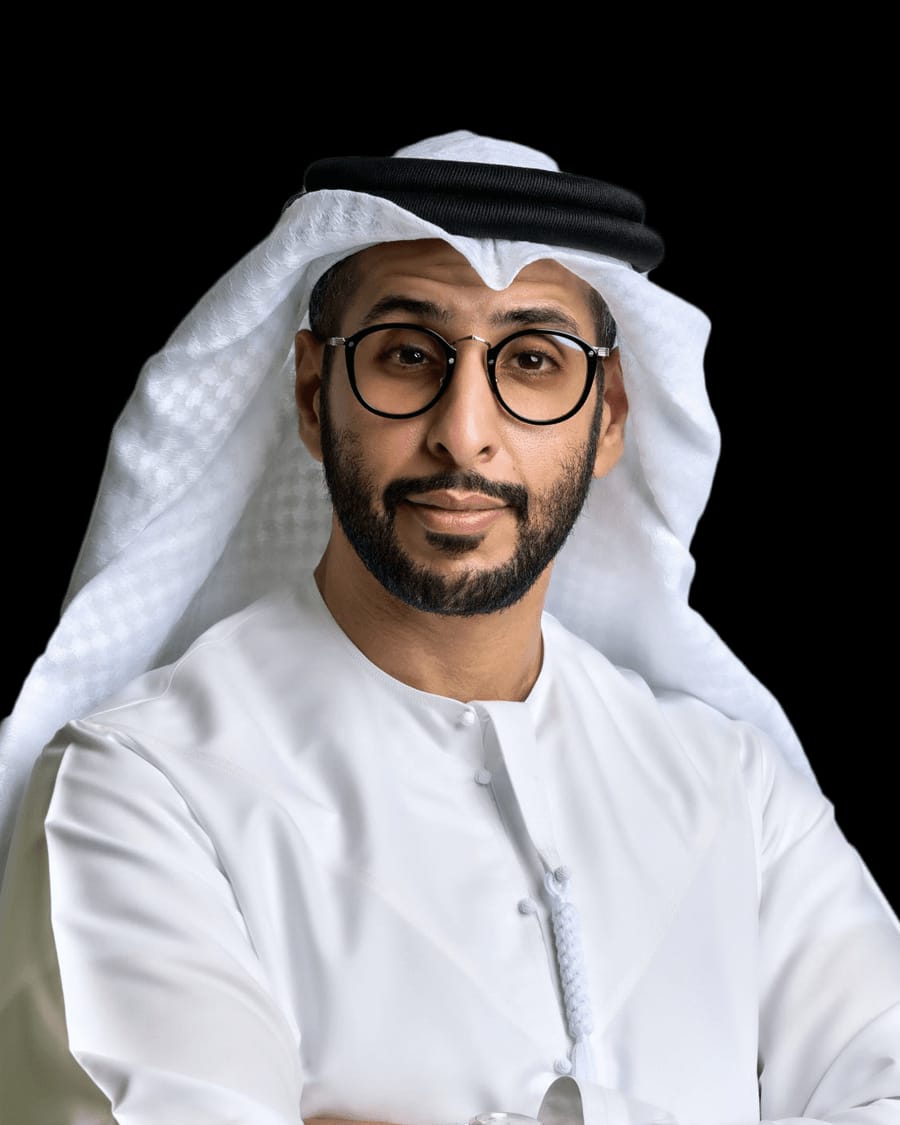
H.E. Abdulla BalalaaUAE Assistant Minister of Foreign Affairs for Energy and Sustainability
His Excellency Abdulla Balalaa is the UAE Assistant Minister of Foreign Affairs for Energy and Sustainability and Chairman of Masdar City, where he leads the UAE's international engagement on energy, climate, water and food security.
He plays a central role in advancing global sustainability partnerships and is currently leading the UAE's efforts to host the 2026 UN Water Conference, alongside serving on a number of national and international boards.
Prior to his current roles, H.E. Balalaa held senior positions across government and industry, including leadership roles at Masdar, Etihad Rail and the Abu Dhabi Urban Planning Council, where he drove large-scale sustainable development and infrastructure initiatives.
He holds an Executive Education qualification from Harvard Business School, a Master's in Sustainable Urban Planning from Paris-Sorbonne University, and a Bachelor's in Civil Engineering from the Higher Colleges of Technology.